This is another over spoken topic on cycling long distances. Let me throw in my uneducated opinion.
When I was young I just jumped on any bike and started peddling. I remember riding my Dads 29er single speed with a big dynamo light on the front, when I was 7 years old. That meant I could not sit on the saddle and had to slide over the bar from side to side to peddle. That got me to my friends house and the shop. Then it was my brothers bike and he was five years older than me. Nice little 24er single speed which was very responsive. Then I got my first bike which was a road bike with 10 gears. In today’s terms we might refer to it as a gravel bike. This thing went any place dirt track, ramping and tarmac. It was a 26er Raleih and I was eleven so I had to grow into the bike.
So bike setup was not high on my priority list as most bikes did not fit me. Those days I never got back ache, numb fingers, numb toes, neck pains and sore knees. Having said that when you are young you are very rubbery and flexible. As time goes on and you get a little older these things start to become a problem.
When I did my first tour of Zimbabwe and Mozambique I discovered some of these wonderful feelings. That bike was a 26er and a little small for me. The numb toes and bloody knees from falling in the road were new experiences for me. This was also the first time I had ridden with cleats. This new scientific development in my riding gear had started me on a whole new way of looking at what relay happens when riding.
Lets touch on a few important points. My brother in law Casper Bardenhorst a Top South African MTB rider said ”Where you come into contact with the bike is where you should pay the most attention”. So I will break this into: Handle bars, peddles and saddle.
Handle bars
I will not tell you what is best for tour or endurance racing. I feel each rider must get up on his faithful steed and see what makes him comfortable. Also what comforts he is willing to sacrifice for speed or heavy load of luggage. Things to look at are the height of the handle bars to the saddle. Remember racing road bikes have a rule that bars are below the saddle to get a more aerodynamic position. This can cause back pain if remaining in this position for a long time. The older you get the less flexible you become thus as you get older it is better to start raising the handle bars. There is a price to be paid with more wind resistance. I believe you ride to enjoy riding. Remember when there is more body weight pressing down on your hands there is also more pressure on the nerves in your wrists. This can cause numb fingers.
Hand position is important. I have put grips on to force me to keep my wrist straight to take pressure off the nerves in the wrist. I tend to be lazy and bend my wrists. This also means the brakes and gear leavers need to be in position so that you do not have to bend wrist or move hand around to operate them. Then there is the selection of handle bars. For racing and smooth gravel drop bars are often preferred. They give you more hand positions and less wind resistance. MTB flat bars can have bar ends added to give more hand positions. Tri bars can be added to take weight off hands and better aerodynamics. They also give you more hand positions.
A good pair of gloves with a gel pad can take some of the vibrations off the hands. Then there is also a need for good winter gloves. Or water proof gloves as there can be quite a wind chill in the wet weather.
Saddle
Probably the most important is to select a saddle that is designed for your sex and body weight. Woman have wider pelvic bones thus need a slightly wider saddle than men. This makes sure the pressure is placed on the right place on the tender parts. There are saddles with groves and spaces in the middle which supposed to reduce pressure on the prostrate. I cannot tell you what I think as I have never used one. There are leather and synthetic saddles. I do not care which one. Just do not try to save pennies as it could cost you lots of pain. I landed a Giro italia on a 50% off sale and that was one of my best things I did to my cycling comfort. So if you go cheap look for a saddle that is high end and wait for a special. There is lots of talk about Brooks saddles. However last time I rode one was when I was a child. These leather saddles can take your body shape and be adjusted to fit you.
Remember those terrible cycling bibs. I thought men look discussing in them. Turns out women like looking at men with them on. I even said ”you would never find me wearing one”. Well I now wear them and enjoy my cycling far more. These need to fit tight to keep the pad in the right place. If the pad moves around you will get saddle sores. Longer rides need better quality shorts. They can be very pricey so read a lot of reviews before purchasing. I read a review that compared imported and locally made. The review gave each a score of 1(bad) to 10 (Very good). I found they had a review of a bib that got a 7 out of 10 that was locally made and it had a higher score than some imported bibs. So I ordered over the internet two from Enjoy fitness in Cape town. Then when I wrote to the company after I finished my first Trans Afrika and thanked them for a saddle sore free race of 2800 km. They wrote back and thanked me and gave me a bib of one grade better plus a cycling shirt with the South African flag on it for free. So when I rode my second Trans Afrika I rode in their bib and shirt. It was even more comfortable.


Remember the saddle setup is also of importance. I have read a lot of things about saddle setup. They talk of all sorts of measurements. So to get your saddle close to right position put a level on it. Then sit on it to feel what it feels like as each manufacturer has slightly different shapes that press on different parts of the tender areas. Then the rail under the saddle can move the saddle closer or further from the handle bars. Remember the best fit should be done by a professional. Height of saddle can be done by getting a formula off the internet and measuring from your groin to the floor when standing. After doing this get on your bike and ride. To high and to low makes your knees pain. So even if you have done the measurements you will have to adjust a little up or down. When you change your bib and shoes that will also change the height of the saddle.
Peddles
Here you can select from flat to cleats. Some people find on long rides their toes get numb.Now you need to find out why this happens.
Flat peddles are handy for if you are ridding steep hills and need to hike a bike up a mountain or put your foot down fast and often. If you are going to slow up the hill it might just be easier to get off and push or carry the bike. Then a good pair of walking shoes will help. The other choice is the older you get the easier you tend to fall and a broken hip or shoulder blade does not mend to easy. My boss now uses flats after he fell with cleats at the age of 60 and had to have a hip replacement. He has not stopped riding.
Cleats are another whole science. Lets put it this way I like them because on bumpy roads my feet do not slip off the peddles. When you need a little more boost you can press down and pull up. When on a long ride and the muscles get like they do not want to work anymore you can change your muscles that are doing the work, by let them rest. You can pull or slide your foot in a different way and change out the muscles that are working. Remember on short rides you can use your normal shoe size. On long rides the foot swells from the muscles working out and can slow the circulation in the foot if shoe is to small.
Socks are also very important. Winter socks warm you up and summer they over heats your feet. These can also be one of the best investments for a pleasurable ride. I have used plastic bags on the feet to stop the wind chili in winters mornings and take the bags off in the heat of the day. That way you do not have to carry lots of luggage.
Well this turned into a monster read with very little facts. What works for one person may not work for another. I just tried to give you a vision of what may help.

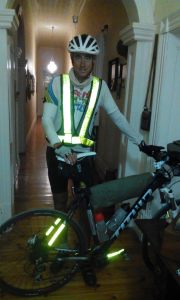
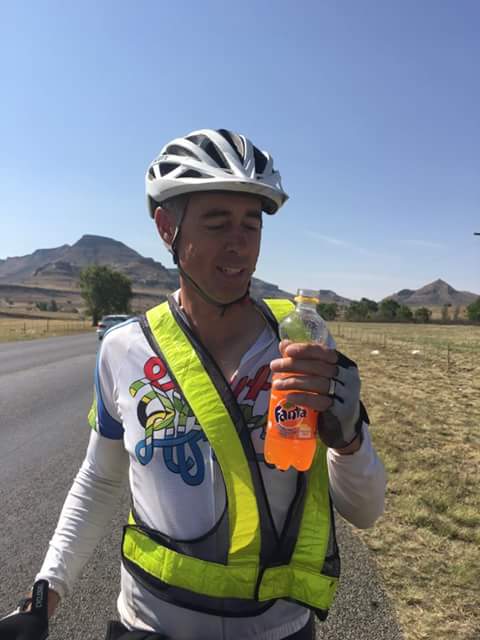
 Far to many cyclist where black. Yes, most bibs come in black. However a high visibility shirt or jacket in a colour like yellow and green or even white can make you more visible in the day.

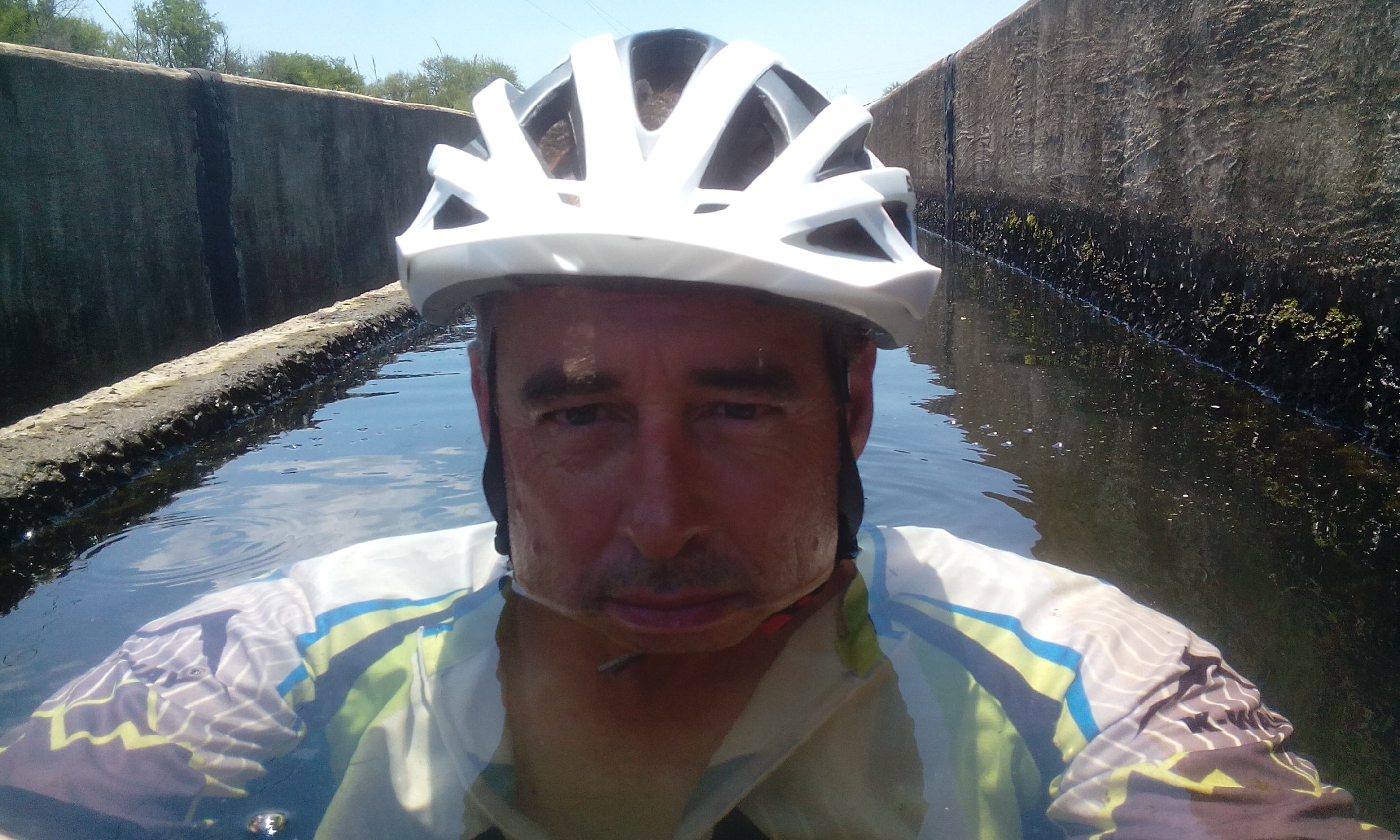


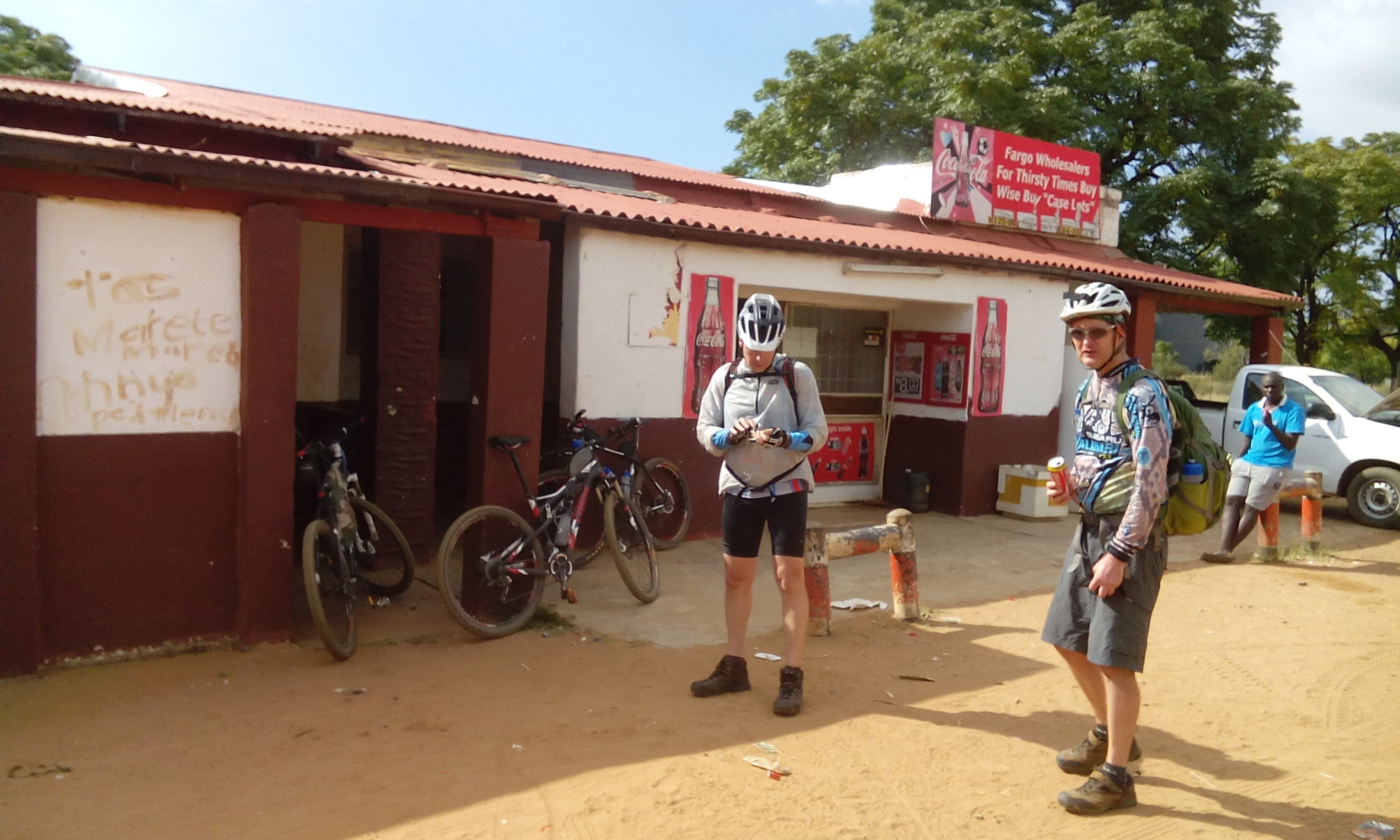


 Long day safaris