The Bicycle I Would Build for the Long Ride

I visited a Specialized bicycle shop this week, and it got me thinking about bicycles.

Not just about the bicycles hanging on the racks, but about what I actually want from a bicycle.

I also stopped at a large outdoor and sporting goods retailer. The contrast between the two stores was interesting.

The large retail store had plenty of bicycles, but they were mostly mass-produced machines aimed at the general consumer. Looking at some of them, I wondered how well some of the components, particularly the bearings, would hold up to the sort of riding I like to do.

The cycling clothing selection was also limited. There were cycling jerseys and shorts, but I couldn’t find a pair of proper cycling bibs.

If you’ve spent several hours in the saddle, you understand why that matters.

There is cycling clothing, and then there is clothing designed to make riding a bicycle for hours more comfortable. For someone planning a long-distance ride, comfort and durability aren’t luxuries. They become necessities.

The outdoor store did have another side to it that I found interesting. There were plenty of camping gadgets and pieces of equipment that could make life on the road a little more comfortable. Some of those things caught my attention and got me thinking about what I might take on a longer bicycle tour.

But it was the Specialized shop that really got me thinking about bicycles.

Looking at the High-End Bicycles

Specialized is one of the well-known, respected bicycle brands, and it is easy to see why when you walk into one of their stores.

There were bicycles that weighed a fraction of what my current bicycle weighs. They had lightweight components, alloy and carbon-fiber construction, aerodynamic frames, fancy wheels and spokes, and all sorts of technology designed to make the bicycle faster and more efficient.

They were beautiful bicycles.

And I can certainly understand why someone would want one.

As I looked along the racks, though, my eye eventually landed on something that perhaps wouldn’t have made a salesperson quite as excited.

It was the cheapest bicycle on the rack.

It was around $1,200.

And I liked it.

Not because it had the most technology.

Actually, quite the opposite.

It was straightforward.

It had a simple alloy frame, mounting points for panniers and water bottles, and a relatively uncomplicated drivetrain with one front chainring. There were no bells and whistles that I didn’t think I needed.

Most importantly, it weighed about half as much as my current bicycle.

That caught my attention.

The model was the Specialized Sirrus 3.

Now, before anyone thinks this is a criticism of Specialized, it isn’t.

Specialized has designed the Sirrus 3 for a purpose. It is an urban and fitness bicycle, not a gravel touring bicycle. The narrower tires and its overall setup make sense for what the bike was designed to do.

What I started doing was imagining what I could make of the basic bicycle.

What Would I Change?

If I bought the Sirrus 3, I wouldn’t leave it exactly as it came from the shop.

I’d personalize it.

The first thing I’d look at would be the handlebars.

I’d put drop bars on it, giving me more hand positions and making it better suited to the sort of longer-distance riding I enjoy. I’d also want a stem that is high enough to give me a comfortable riding position.

One thing I’ve learned from riding is that being stretched out too far or having the handlebars too low can become very uncomfortable after several hours.

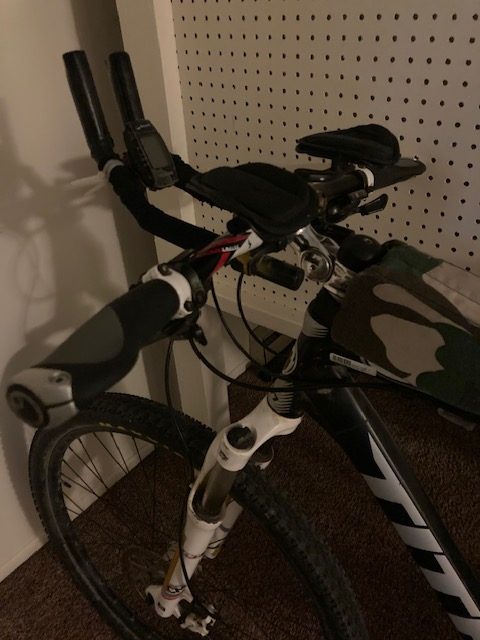
I’d also like the ability to fit aerobars.

For shorter fitness rides, I might not need them. But when you’re riding for hours, being able to change your position can make a big difference.

I’d want pedals that could accommodate cleats but also give me the option of riding with flat shoes.

Then there are the tires.

The Sirrus 3 comes with narrower tires because it was designed primarily for urban riding and paved surfaces. If I were going to use it mainly for riding on good roads, I’d probably leave the tires alone.

But my idea is something more versatile.

I’d like the ability to run tires somewhere between about one and two inches wide, preferably tubeless, depending on where I planned to ride.

The salesperson actually mentioned that Specialized is looking at bringing out a version with larger tires, which makes sense as more riders look for bicycles that can move between pavement, gravel and other surfaces.

For the kind of touring I have in mind, wider tires would give me more options.

Gearing Would Depend on the Ride

The bicycle I looked at had one front chainring.

I actually like the simplicity of that.

There is one less component to maintain and one less thing to go wrong.

But I might eventually change that.

I would want enough gearing to give me a good top speed on flat roads while also giving me a low enough gear to climb hills when the bicycle is loaded with panniers.

Whether I really needed two chainrings would depend on experience.

I’d have to load the bicycle up and ride some hills first.

That’s one of the lessons I’ve learned from cycling: what looks good on paper doesn’t always tell you what you need when you’re actually riding.

My Ideal Touring Bicycle

All of this got me thinking.

If I could design a bicycle specifically for myself—something that I could use for fitness riding around my neighborhood, but also take on a long-distance bicycle tour—what would it look like?

My list would be something like this:

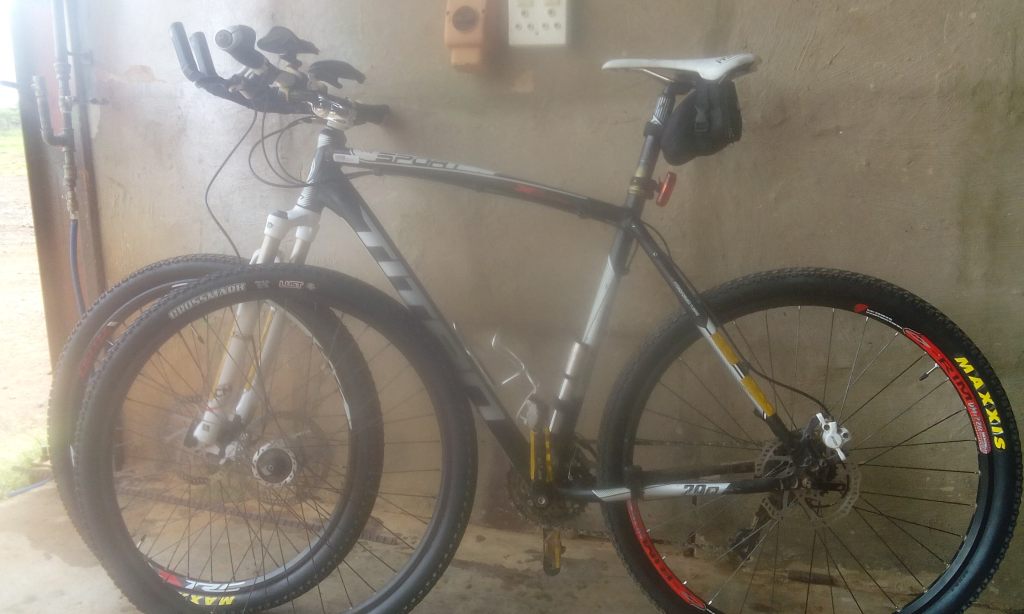
  • Lightweight, but available in an XL frame to suit a tall rider
  • Drop handlebars
  • A higher stem for a more comfortable, upright position
  • The ability to fit aerobars
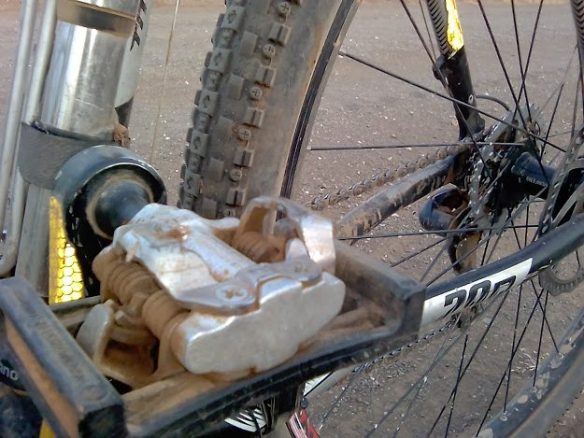
  • Pedals that can accommodate cleats and flat shoes
  • Mounting points for panniers
  • Mounting points for water bottles and other equipment
  • Front suspension or a fork capable of handling rougher surfaces
  • A useful range of gears for both speed on the flats and climbing hills
  • Hydraulic disc brakes
  • 29-inch wheels
  • Tubeless tires with a useful range of widths, approximately 1 to 2 inches
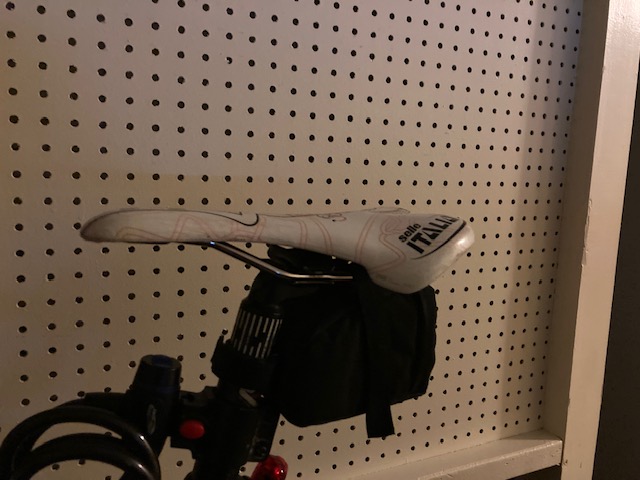
  • A comfortable saddle that properly supports the sit bones
  • A dynamo hub
  • An electrical system for lights and charging equipment
  • Front and rear lights
  • Manual shifters
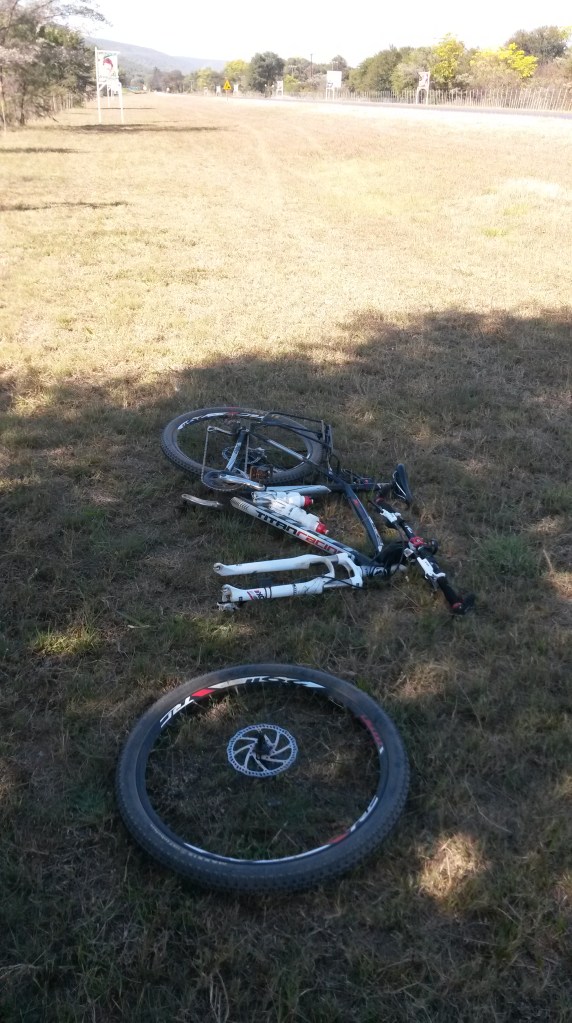
  • Easily removable wheels, preferably with skewers or another simple release system
  • Reflective tape on the front and rear forks
  • A well-sealed bottom bracket bearing that is easy to replace

It sounds like a long list.

But after years of riding, I don’t think I’m looking for a bicycle with every possible feature.

I’m looking for a bicycle that gets the important things right.

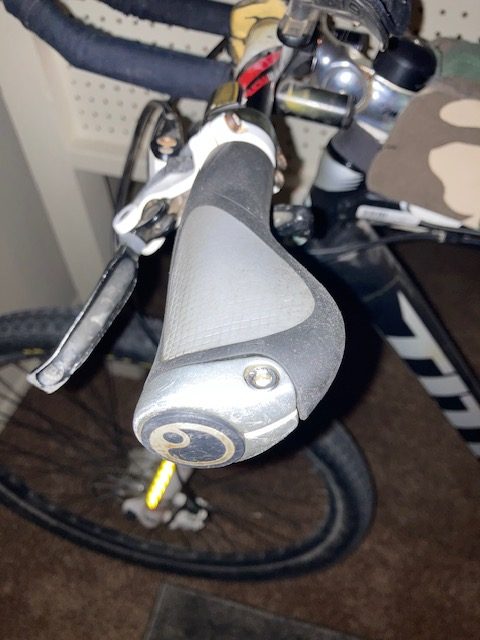
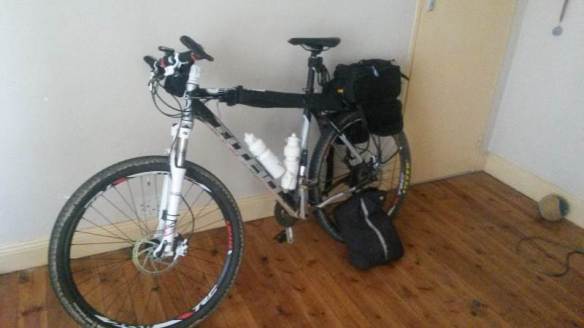
Setup for my first Trans Africa race

Comfort, Durability and the Freedom to Ride

For me, it comes down to three things:

Comfort. Durability. Longevity.

I want a bicycle light enough that riding it is enjoyable.

I want it comfortable enough that I can spend hours in the saddle without constantly thinking about the bicycle.

I want it strong enough to carry the equipment I need for a longer trip.

And I want components that are durable, serviceable and relatively simple.

There is something appealing about simplicity.

Every additional component can have a purpose, but every additional component can also become something that needs adjustment, maintenance or replacement.

That doesn’t mean I don’t appreciate high-end bicycles.

Quite the opposite.

Standing in the Specialized shop and looking at those incredibly light machines was impressive. The engineering, materials and technology that go into modern bicycles are remarkable.

But a bicycle designed to win a race isn’t necessarily the bicycle I want to take across the country.

I’m looking for something somewhere between a fitness bicycle, mountain bike, a gravel bicycle and a touring bicycle.

Something I can ride hard on a paved road when I want to put some speed into the ride.

Something I can take onto gravel when the road disappears.

Something that can carry panniers when I decide to disappear for a few days.

And something that I can maintain without needing a degree in bicycle engineering.

Perhaps that’s what comes with riding for a long time.

When you first start cycling, you might look at a bicycle and ask:

“How fast is it?”

After enough miles, you start asking different questions.

“How comfortable is it?”

“How long will it last?”

“What happens when I put 30 or 40 pounds of gear on it?”

“Can I fix it when I’m 100’s of miles from the nearest bicycle shop?”

And perhaps most importantly:

“Will I enjoy riding it?”

That’s the bicycle I’m looking for.

Not necessarily the most expensive one.

Not necessarily the lightest one.

Just the right one for the ride I want to take.

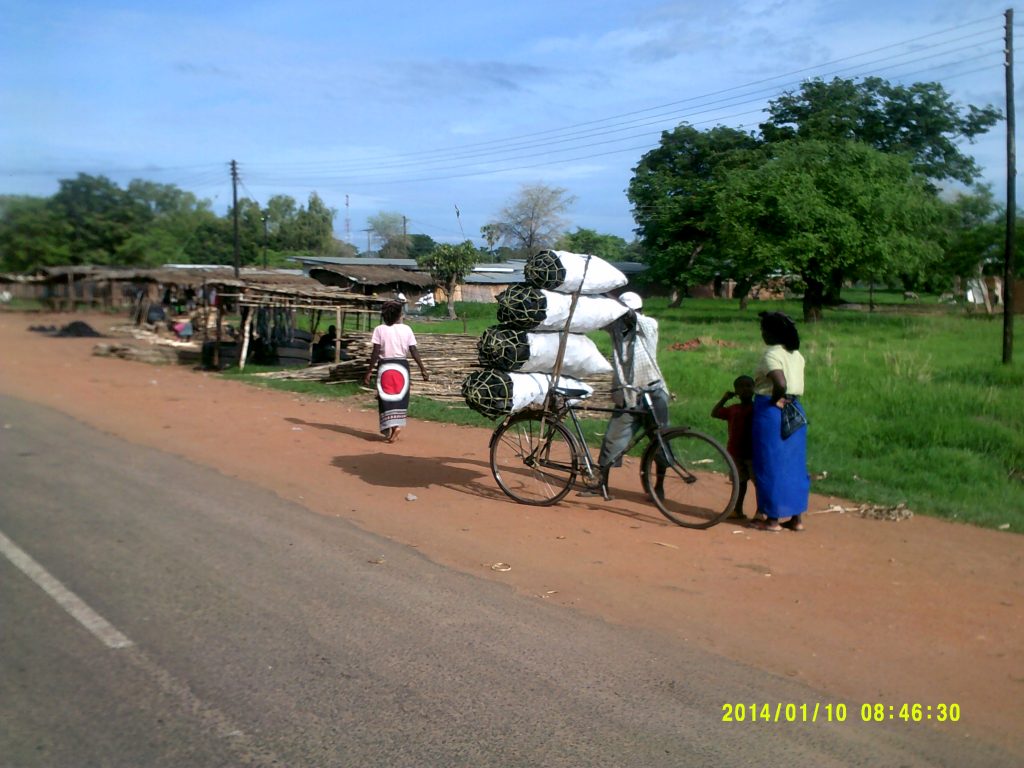
Common bicycle in Africa. This one transporting charcoal.

What would you build or like to be on your bicycle? Write in the bubble at top of post.

Following Annabelle’s African Bicycle Adventure – And Rethinking Belt Drives

Over the past few months I have been following a cyclist on TikTok called Annabelle 🙂. She and her boyfriend, who are from the USA, have ridden their bicycles all the way from Europe down the eastern side of Africa. They have now reached South Africa and are closing in on Cape Town.

It has been fascinating to follow their journey. Like many long-distance cyclists in Africa, they have faced far more than just long days in the saddle. Visa bureaucracy has caused some significant delays along the way, and in several countries they had to arrange for spare parts and visas to be sent ahead. Even something as simple as collecting a package became an adventure in itself.

Now they are riding through South Africa during winter. Although many people think of Africa as always being warm, this time of year can be surprisingly cold. In the mountains they could even encounter snow. Fortunately, by staying closer to the west coast they seem to have avoided the worst of the winter weather so far.

One recent problem really caught my attention. Annabelle’s bicycle is fitted with a belt drive instead of the traditional chain, and unfortunately the belt has broken.

That immediately made me stop and think.

For years I have read how reliable belt drive systems are supposed to be. Many cyclists praise them as the ultimate low-maintenance solution. They don’t need lubrication, they aren’t affected by muddy conditions in the same way as a chain, and without oily lubricant they don’t attract dust and grit. I’ve even read reports from riders who have covered tens of thousands of miles without replacing a belt.

I have often thought about converting to a belt drive with an internal gear system. On paper it sounds ideal for African travel. No oily chain to clean, less wear from sand and dust, and far less routine maintenance.

But watching Annabelle’s experience has reminded me that every system has its weaknesses.

If a chain breaks almost anywhere in Africa, there is a reasonable chance that you can repair it or find a replacement. A broken belt is a very different story. In South Africa you can probably find one in the larger cities, but once you head into remote regions the chances become much slimmer. Reliability is wonderful—until the one time something does fail.

It also reminded me of my own first bicycle tour through Africa.

Before leaving I had my bicycle serviced, thinking everything would be perfect. Instead, the shop fitted a new chain onto a badly worn front chainring. The worn teeth caused the chain to catch constantly. In Harare in Zimbabwe, I had to find a bicycle shop to help sort it out.

Even then, it wasn’t an instant fix. For around 500 kilometers after leaving Harare the new chain and chainring had to gradually wear together before everything finally settled down. It was simply a matter of letting the chain and chainring “marry” each other.

Little mechanical problems like that can take the shine off an otherwise incredible journey.

Watching Annabelle’s travels has reminded me that bicycle touring is never just about the riding. It’s about adapting to the unexpected, solving problems, and continuing despite the setbacks. Those are often the stories we remember most.

I’m still attracted to the idea of a belt drive and internal gear system, but now I’m asking myself whether the reduced maintenance is worth the potential difficulty of finding replacement parts in remote areas.

I’d love to hear from readers who have experience with belt drive touring bikes.

  • Have you toured long distances with a belt drive?
  • Have you ever had one fail?
  • Would you choose a belt drive over a traditional chain for an extended African expedition?

Please leave a comment below and share your experiences.

I’ll also include a link to Annabelle’s TikTok account so you can follow the final stages of their remarkable journey to Cape Town.

Cycling at Nature’s Pace

One of the things I enjoy most about cycling is the pace.

Unlike travelling by car, bicycle touring allows you to experience the world around you. You feel the wind on your face, smell the changing scents of the countryside, and hear the sounds of nature that are often missed when travelling at higher speeds.

This week I filmed part of my ride through the countryside. When I played the video back, I realized it had been recorded in fast motion. Watching it felt more like driving a car than cycling a bicycle! While it doesn’t fully capture the experience of being there, it does provide a quick glimpse of the scenery I enjoyed along the route.

Video: Cycling through the countryside

Later, I stopped to take in the surroundings and record the sounds of nature. As I stood quietly, I heard deer moving through the bush and birds singing from the trees.

I also noticed signs posted by a local landowner asking people to stay off the property. While some may see these signs as restrictive, they also help protect wildlife habitat by reducing disturbance. Sometimes the best thing we can do for nature is simply give it the space to thrive.

Moments like these are one of the reasons I love cycling adventures. Travelling at a slower pace allows you to notice details that would otherwise pass by unnoticed and reminds you that nature is constantly at work around us.

Video: Sounds of the bush and wildlife

Have you ever noticed how much more you see and hear when you slow down and travel by bicycle? Leave a comment below. Love to hear from you.

Is RAGBRAI Calling, or Is It Just Summer?

Over the last few weeks, I’ve noticed here in Illinois more and more cyclists rolling down the roads with panniers hanging off their bikes.

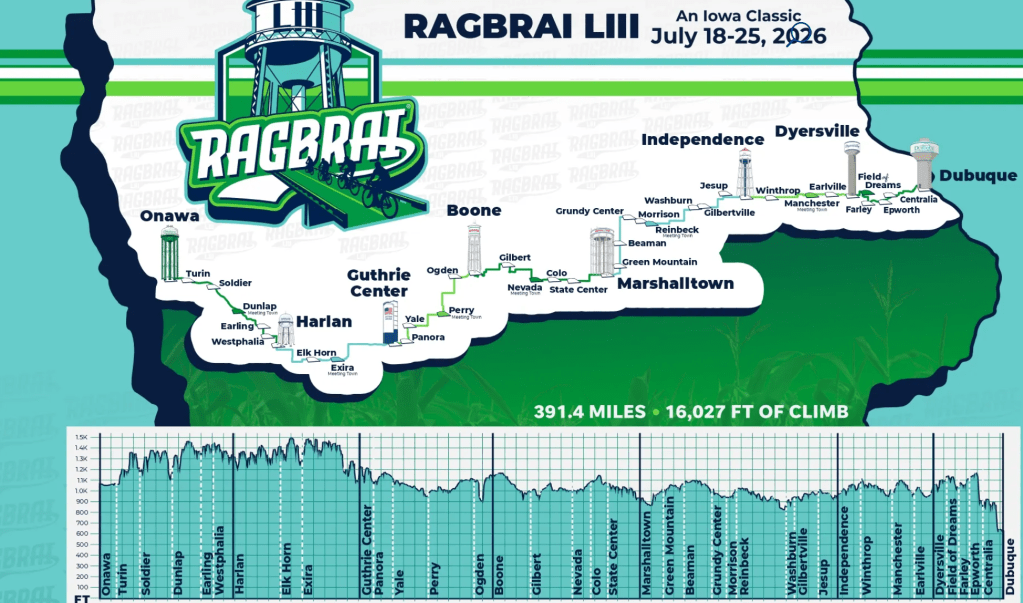
Are they preparing for RAGBRAI, July 18-25?

Or are they simply answering the call of summer?

Either way, it brings a smile to my face.

The weather has certainly been calling me. Today I headed out for a ride near Knoxville, Illinois, enjoying quiet roads, green fields, and the simple pleasure of turning the pedals.

There is something special about seeing loaded bicycles. They represent adventure, independence, and the promise that there is always another road to explore.

Perhaps those riders are training for the week-long journey across Iowa. Perhaps they’re just escaping for the day. Either way, they’re living life from the saddle instead of watching it pass by.

I’ve included a short video from today’s ride, along with the route map for this year’s RAGBRAI. Maybe it will inspire you to dust off your bike and answer the call yourself.

Summer doesn’t last forever.

See you out on the road.

You may even what to put on one of those cycling T-shirts in my TikTok shop.

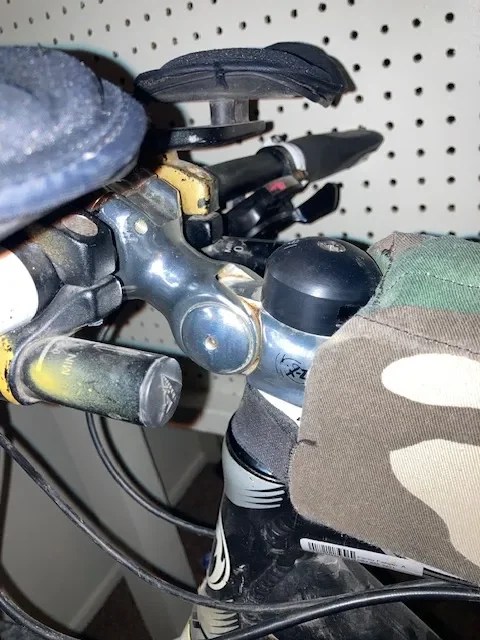
Improve Comfort: Riser Adjustments Explained

This simple riser adjustment has been with me for some years now. The beaty is it can be modified with just one Allen wrench which is in you saddle bag already.

There is a fin line with your body weight on your hands or bottom. Then there is the age that catches everybody. Then the lower you are the less wind resistance.

I made a short video:

Cycle 2 Charge

This has been a game changer to add to my dynamo hub. Very simple no complicated connections. I have been using it now for about 6 years. Anything that uses a USB can be plugged in.

Take a look at my book- Run Away to Africa

Malawi taxi ride from Mzuzu to Karonga (campfire story)

Video

Run Away to Africa – Book now Live and Available | A Journey of Freedom and Adventure

You can now purchase Run Away to Africa directly through my shop page using the link in this post.

https://www.amazon.com/s?k=Run+Away+To+Africa+by+Kenneth+Fagan&crid=1ZJH3EI2RHUOT&sprefix=run+away+to+africa+by+kenneth+fagan%2Caps%2C186&ref=nb_sb_noss

Whether you’re interested in:

  • Travel memoirs.
  • African adventure stories.
  • Cycling and exploration journeys.
  • Books about freedom and lifestyle change.

This book brings those elements together into one powerful story. I’ve shared two videos to mark this milestone:

  • One showing the book now officially published on Amazon KDP.
  • Another announcing that Run Away to Africa is now available for sale.

These videos capture the moment this travel memoir became real.

Book Launch Videos:

Announcement book is published.

Announcement book is for sale.

Enjoy the book. Was a long time in editing and feel it is ready. This opens up the way for me to start books on my other adventures. I have an idea that I could venture into the motivational book market.

Tour de Dad

Was thinking of the tour I did with my dad. It has been 4 years and 8 months from his passing. I will advise to take trips like this with your loved ones.

Meditation on Two Wheels: Finding Peace Through Cycling


There’s a lot of talk these days about meditation, mindfulness, and finding peace.

For some, that means sitting still in a quiet room.
For me, it’s something very different.

It’s getting on a bike and riding.


The Ride That Clears More Than the Road

I’ve found that the longer the ride, the quieter my mind becomes.

Out on the road, away from the noise of work and daily life, something shifts. The constant pressure, the decisions, the stress—they start to fade. What replaces them isn’t emptiness, but clarity.

What started as just a ride has turned into something more. Something I didn’t expect.

A form of meditation.


Pushing Beyond What I Thought Was Possible

One of the biggest surprises has been discovering that my physical limits weren’t where I thought they were.

There have been moments on long rides where everything in me said to stop. Legs burning. Mind doubting. Comfort zone long gone.

But pushing through those moments changed something.

It showed me that most limits aren’t real—they’re just lines we draw for ourselves.

And once you step past them, even just a little, it opens the door to a different way of thinking:

I can do more.
I can handle more.
I’m capable of more than I thought.


Time Alone Builds Strength

There’s something powerful about being alone with your thoughts for hours at a time.

No distractions. No noise. Just you and the road.

That time has helped me work through things I didn’t even realize were weighing on me. It’s where problems get sorted out, ideas come together, and perspective returns.

It’s also where a quiet kind of confidence starts to build.

Not loud. Not showy.
Just steady.


When Everything Comes Back Into Perspective

Life has a way of piling things on—work stress, daily challenges, responsibilities.

But I’ve noticed something.

No matter how heavy things feel, when I go for a ride, it changes.

Somewhere along the road, things begin to make sense again. Problems don’t always disappear, but they shrink. They become manageable.

You realize what matters—and what doesn’t.


Losing Yourself to Find Yourself

There’s also something about being out in the world—seeing the landscape, the open space, the movement—that takes your focus off yourself.

And strangely, that’s where you find something deeper.

When you stop thinking so much about yourself, you start seeing things more clearly.

You gain perspective.


My Version of Meditation

I wouldn’t have called it meditation at first.

But that’s exactly what it is.

Not sitting still—but moving forward.
Not silence—but rhythm.
Not escape—but clarity.

It’s where I find peace.
It’s where I reset.
It’s where I remember what I’m capable of.


Final Thought

You don’t have to follow someone else’s version of meditation.

Sometimes, it’s not about sitting still at all.

Sometimes, it’s about getting out, pushing yourself, and giving your mind the space it needs to breathe.

For me, that space is found on two wheels.


🚴‍♂️ Live the Mindset

If this resonates with you, I’ve created designs inspired by this exact mindset—pushing limits, hard work, and finding freedom in the process.

👉 Check out my gear on TikTok
👉 Follow the journey at Longdaysafaris.com