Untold Stories from Malawi

Over the past few weeks, I’ve been working on my next book, Run Away to Malawi. I’m about halfway through the manuscript, and one thing has surprised me.

As I revisit my journals and photographs, I’ve realized just how many stories never made it onto my blog. There are dozens of moments from the journey that were never fully told. Some photographs appeared in the sidebar of Longdaysafaris.com with little or no explanation, but every one of them has a story behind it.

One memory that found its way into the book was a conversation with a cyclist I met along the road in Malawi.

His bicycle wasn’t loaded with camping gear like mine. Instead, it was piled high with supplies. He explained that he owned three small shops in different villages. Rather than sitting behind a counter, he spent his days riding from village to village delivering stock. He employed people to run the shops while he managed the business from the saddle of his bicycle.

His main products were simple essentials: sugar, flour, and coffee. Items that every family needed.

Another detail I had forgotten was what happened when you bought a bottle of soda. You couldn’t simply walk away with it. The bottle had value. You drank your soda at the shop and returned the empty bottle so it could be sent back for a deposit.

Digital Camera

That also explained something I noticed throughout my journey.

The children who ran out to greet me weren’t just waving. Many would ask if I had any empty bottles. To them, those bottles were useful. They carried drinking water to the fields, stored drinking water at home, and found countless ways to reuse them.

Very little went to waste.

In many of the rural villages, there was almost no litter. Things were repaired, reused, repurposed, or eventually burned. Nothing was thrown away simply because it was old.

These are the kinds of stories that don’t always fit into a daily travel blog, but together they paint a richer picture of life in Malawi.

I’m looking forward to sharing many more of these moments in Run Away to Malawi. I think you’ll discover that the journey was about far more than cycling from one place to another—it was about the people, their ingenuity, and the lessons they unknowingly taught me along the way.

Digital Camera

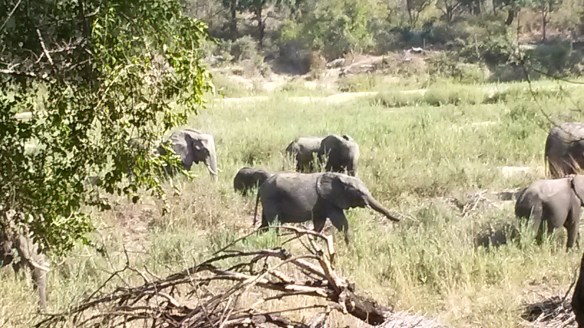
Elephant Teasing Harry

When I was living in the Sabi Sands Game Reserve, I shared a campsite with a friend named Harry. It was a simple setup — a main house and a small cottage sitting in a clearing in the African bushveld (savanna). Nights out there were usually quiet, except for the sounds of wildlife moving through the bush.

One night, though, a large bull elephant decided to pay Harry a visit. The elephant stood right in front of his house, calmly tearing apart a bush like he owned the place.

Harry wasn’t too impressed.

First, he went outside and tried to chase the elephant away. The elephant barely acknowledged him. Next, Harry came back out with a firecracker, hoping the noise would scare the big guy off.

That didn’t work either.

Between Harry’s front door and the elephant was a Toyota Land Cruiser pickup with a heavy-duty bull bar on the front. So Harry climbed into the pickup, slammed the door, honked the horn, and made as much noise as he could to try and scare the elephant away.

The elephant simply walked out into the clearing where the road comes in.

Harry drove the pickup up behind him and kept honking. It was quite a sight to watch — I was lying in my bed looking out the window at the whole thing. Honestly, if that elephant had decided to sit down, he probably would have sat right on the hood of the pickup.

The elephant slowly headed down the road and then moved into a patch of bush that sits between the entrance and exit road into the clearing. Harry circled around the bush a few times with the pickup, but he still couldn’t get the elephant to move on.

Eventually, Harry gave up and went off to bed.

The elephant, however, just stood quietly in the dark, waiting until the lights in the house went off. Then he snapped a small tree, the sound echoing through the bush. Harry rushed out again with a spotlight, but when you shine a spotlight on an elephant at night they look grey and blend right into the darkness. He couldn’t see a thing.

Luckily, my eyes had already adjusted to the dark and there was a half moon out, so I could see what was going on.

The elephant stood still for a while, and when the night sounds started filling the air again, he quietly walked through the bush to the opposite side of the house. There he waited again. Then suddenly — crack — he ripped off another branch, the sound carrying through the bushveld.

Out came Harry again with the spotlight. Still nothing. After a moment he went back inside.

The elephant stayed quiet for about ten minutes and then slowly walked around behind my cottage. At this point he was standing about five feet from my pillow. I was lying in bed watching him through the window.

Now he was in the shadow of my cottage, hidden from the main house. The big bull stood there dangling his trunk, twisting the end of it like someone turning their wrist. It was amazing how such a huge animal could be so quiet.

He slowly shifted his weight from leg to leg, waiting for the sounds of the night to build again. The cicadas were ringing loudly through the air. I could tell he was getting ready to move on.

Then he started to swagger off past my cottage. I could see the folds in his skin and his tail swaying with each step. As he passed the big jackalberry tree in front of my place, he ripped off a large branch and kept walking.

He crossed the dry sandy riverbed and disappeared into the night.

Not long after, Harry came out again with his spotlight.

That elephant bull definitely had a sense of humor — he was just teasing Harry. The bull knew him well. He had been visiting that campsite for years. And when the lemon tree is full, he comes in and strips the leaves and lemons off in one wrap of his trunk.

KJKJ$