Following Annabelle’s African Bicycle Adventure – And Rethinking Belt Drives

Over the past few months I have been following a cyclist on TikTok called Annabelle 🙂. She and her boyfriend, who are from the USA, have ridden their bicycles all the way from Europe down the eastern side of Africa. They have now reached South Africa and are closing in on Cape Town.

It has been fascinating to follow their journey. Like many long-distance cyclists in Africa, they have faced far more than just long days in the saddle. Visa bureaucracy has caused some significant delays along the way, and in several countries they had to arrange for spare parts and visas to be sent ahead. Even something as simple as collecting a package became an adventure in itself.

Now they are riding through South Africa during winter. Although many people think of Africa as always being warm, this time of year can be surprisingly cold. In the mountains they could even encounter snow. Fortunately, by staying closer to the west coast they seem to have avoided the worst of the winter weather so far.

One recent problem really caught my attention. Annabelle’s bicycle is fitted with a belt drive instead of the traditional chain, and unfortunately the belt has broken.

That immediately made me stop and think.

For years I have read how reliable belt drive systems are supposed to be. Many cyclists praise them as the ultimate low-maintenance solution. They don’t need lubrication, they aren’t affected by muddy conditions in the same way as a chain, and without oily lubricant they don’t attract dust and grit. I’ve even read reports from riders who have covered tens of thousands of miles without replacing a belt.

I have often thought about converting to a belt drive with an internal gear system. On paper it sounds ideal for African travel. No oily chain to clean, less wear from sand and dust, and far less routine maintenance.

But watching Annabelle’s experience has reminded me that every system has its weaknesses.

If a chain breaks almost anywhere in Africa, there is a reasonable chance that you can repair it or find a replacement. A broken belt is a very different story. In South Africa you can probably find one in the larger cities, but once you head into remote regions the chances become much slimmer. Reliability is wonderful—until the one time something does fail.

It also reminded me of my own first bicycle tour through Africa.

Before leaving I had my bicycle serviced, thinking everything would be perfect. Instead, the shop fitted a new chain onto a badly worn front chainring. The worn teeth caused the chain to catch constantly. In Harare in Zimbabwe, I had to find a bicycle shop to help sort it out.

Even then, it wasn’t an instant fix. For around 500 kilometers after leaving Harare the new chain and chainring had to gradually wear together before everything finally settled down. It was simply a matter of letting the chain and chainring “marry” each other.

Little mechanical problems like that can take the shine off an otherwise incredible journey.

Watching Annabelle’s travels has reminded me that bicycle touring is never just about the riding. It’s about adapting to the unexpected, solving problems, and continuing despite the setbacks. Those are often the stories we remember most.

I’m still attracted to the idea of a belt drive and internal gear system, but now I’m asking myself whether the reduced maintenance is worth the potential difficulty of finding replacement parts in remote areas.

I’d love to hear from readers who have experience with belt drive touring bikes.

  • Have you toured long distances with a belt drive?
  • Have you ever had one fail?
  • Would you choose a belt drive over a traditional chain for an extended African expedition?

Please leave a comment below and share your experiences.

I’ll also include a link to Annabelle’s TikTok account so you can follow the final stages of their remarkable journey to Cape Town.

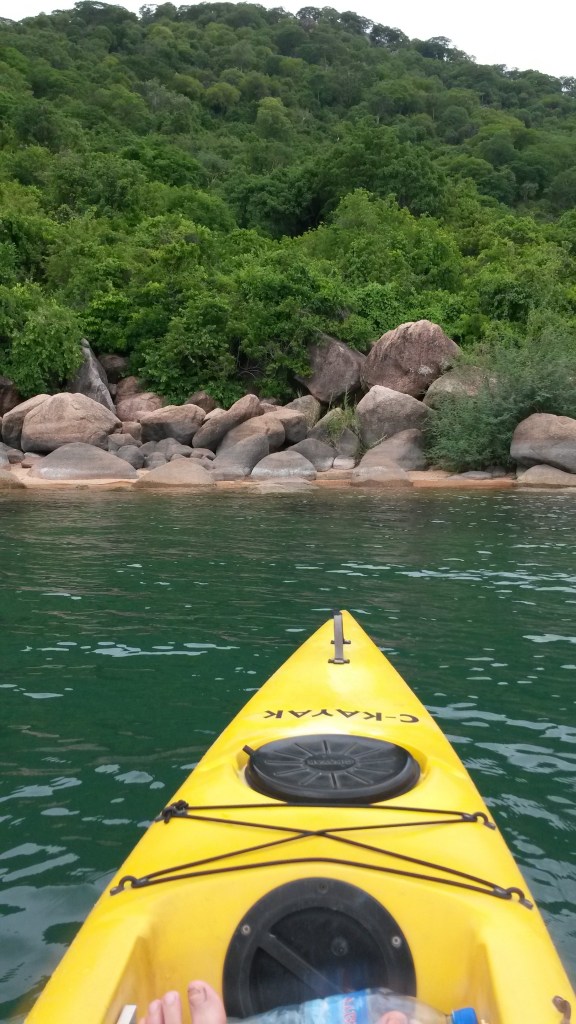
Kayaking to Domwe Island, Lake Malawi in Great Rift Valley/ An Unforgettable Malawi Adventure

What would you do if you had to paddle across one of Africa’s deepest lakes, knowing the dark water beneath you drops hundreds of metres into the Great Rift Valley?

That was the challenge I faced when I decided to kayak from Kayak Africa to Domwe Island on Lake Malawi (also known as Lake Niassa). It became one of those travel experiences that pushed me beyond my comfort zone and reminded me that the best adventures often begin with a little uncertainty.

Before setting off, the team at Kayak Africa explained that everyone paddling to the island must be accompanied by a guide. The lake conditions can change quickly, and they want to ensure every guest arrives safely. We left early in the morning, taking advantage of the calm morning before the wind had a chance to build.

Thumbi west Island Infront Kayak Africa lodge with Domwe Island just out view on the right.

Although I’d kayaked before, I certainly wouldn’t call myself experienced. As I climbed into the kayak, it felt surprisingly wobbly, and I wondered if I’d made the right decision. But there was no turning back now.

From the shore, Mumbo Island looked deceptively close. Once you’re relying entirely on your own muscles to get there, however, the distance seems to stretch endlessly across the water.

About halfway through the crossing, my shoulders were burning. Every paddle stroke reminded me of muscles that clearly hadn’t been used for this kind of workout in a long time.

Then something unexpected happened.

The water beneath me changed from a light blue to an incredibly dark blue-green. Instantly, my imagination took over.

Lake Malawi sits within the Great Rift Valley, where the African continent is slowly pulling apart. Over millions of years, enormous rift lakes formed here, creating incredible depths. Technical scuba divers travel from around the world to explore these deep waters because they offer exceptional diving conditions without the powerful currents found in the ocean.

Some view from the kayak.

Knowing just how deep the lake was made me wonder what might be lurking below.

Of course, there were no monsters beneath me—but my imagination painted a different picture. Every glance into the dark water made it feel as though some giant creature could emerge from the depths at any moment.

To quiet those thoughts, I fixed my eyes firmly on the beach ahead. One paddle stroke after another.

The beach where I landed at Domwe Island with the dining room deck showing.

As the crossing progressed, the wind began to pick up. Soon small whitecaps formed across the lake, and the waves reached around two feet high. The kayak rose and dipped over each swell, its bow slicing through the water. They weren’t ocean-sized waves, but for someone with limited kayaking experience, they certainly commanded respect.

Meanwhile, my guide paddled calmly beside me, making it all look effortless.

Eventually, the shoreline grew larger, and before long my kayak scraped gently onto the beach.

I climbed out feeling exhausted, relieved—and incredibly proud.

My kayak with guides kayak and another person stopping by to check if lodge needs help.

Sometimes the greatest part of an adventure isn’t reaching the destination. It’s discovering that you’re capable of much more than you first believed.

If you’re looking for an unforgettable experience in Malawi, kayaking across Lake Malawi to Domwe Island or other islands can be one I can wholeheartedly recommend. It’s physically challenging, mentally rewarding, and offers a unique perspective on one of Africa’s most spectacular lakes.

Want more real travel adventures like this?

Download my ebook and discover the stories, lessons, and unforgettable experiences from my bicycle journeys across Africa. If you enjoy authentic adventure travel, practical tips, and moments that push you beyond your comfort zone, you’ll love what’s inside. My ebook Run away to Africa by Kenneth Fagan on Amazon. There is a link in the shop page. If you want to book accommodation on an island https//kayakafrica.co.za can be found on Google.

Cycling in Africa: A Night Ride and Village Welcome in Mozambique

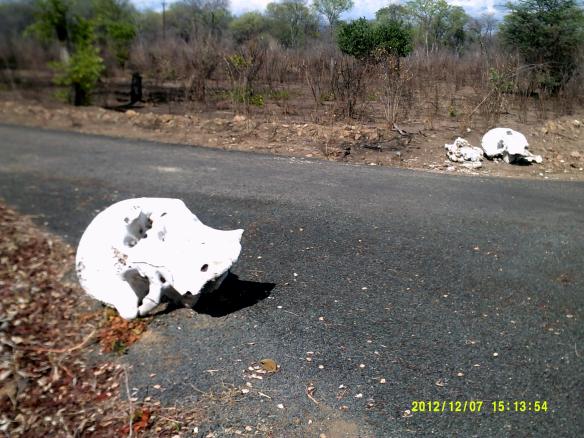
I was riding my bicycle through the African savannah as the sun hit the horizon when a thought hit me that made the road ahead feel a lot longer — my small headlamp wasn’t strong enough to spot elephants in time if they were standing on the road. Earlier that day I had already passed two elephant skulls and several piles of dung. Now the night was closing in fast.

Elephant skulls

Long-distance cycling in Africa always comes with a sense of adventure and the unexpected. While riding my bicycle from Mague to Estima in Mozambique, I experienced one of those nights that perfectly captures what bicycle touring across Africa can be like.

The road stretched out in front of me — a good tar road cutting through the wide African savannah. But I was starting to worry about where I would camp for the night.

This region had once been part of the Mozambican civil war, and I knew landmines had been planted in areas not far from the road. Camping randomly along the roadside didn’t feel like a good idea.

Cycling into the African Night

The sun slowly dipped below the horizon and soon disappeared completely. One by one the stars came out, leaving me riding through the savannah with only a small head headlamp lighting the way.

From past experience cycling in Africa, I knew that light wouldn’t give me enough time to identify elephants on the road ahead. At night, elephants often blend into the darkness. With a spotlight they simply look like part of the night itself.

That meant there was a real possibility of riding straight into a herd before realizing what was happening — something no cyclist wants to experience.

Finding a Village in Mozambique

Around 8 p.m., I finally came across a small tribal village and decided to stop and ask if I could camp there for the night.

As I stopped, I promptly fell off my bicycle when my cleat refused to disengage — not the most impressive entrance into the village.

An older man saw the whole thing. We tried to communicate, but neither of us understood the other. He called over a younger man who, fortunately for me, had spent time working in Zimbabwe and spoke some English.

I explained that I was cycling across Mozambique and asked if I could camp in the village.

The answer was respectful but not simple.

They told me they didn’t have permission to allow it. I would need to speak to the night watch — the man responsible for keeping elephants out of the farmland at night.

Asking the Village Elder

We found the night watch, and after listening to my story he explained that he also didn’t have the authority to allow it. Only the village elder could make that decision.

So we walked to the elder’s house.

He wasn’t there at the time and was visiting somewhere else in the village, so we waited outside. About fifteen minutes later he returned.

When he arrived, my translator bowed down, making sure his head stayed lower than the elder’s chin — a sign of respect still practiced in the village. Seeing that in today’s modern world was fascinating, and I wasn’t quite sure if I should be doing the same.

The elder listened carefully to my story about cycling across Africa and looking for a safe place to camp.

Then he smiled and immediately offered a place right beside his house.

Camping in an African Village

I thanked him and set up my tent near his home. The elder then asked through the translator if I needed food. I told him I had brought some with me, so I cooked a simple meal of instant noodles.

Later that evening I sat under the trees near his house where several elders of the village were gathered talking quietly in the dark. I didn’t understand their language, but it was still a special moment to sit there and share the night air with them.

Eventually I excused myself and crawled into my tent. Not knowing how safe my bicycle would be, I pulled it inside the tent with me — which made for a tight fit in a two-man tent.

Sunrise in the Village

Just before sunrise the roosters began crowing and the village slowly came alive with the sounds of morning.

I packed my gear back onto the bicycle and waited for my translator, who had said he would come by in the morning.

Soon the elder stepped out of his house. I asked the translator to thank him again for his hospitality. Once again, the young man bowed respectfully as he spoke.

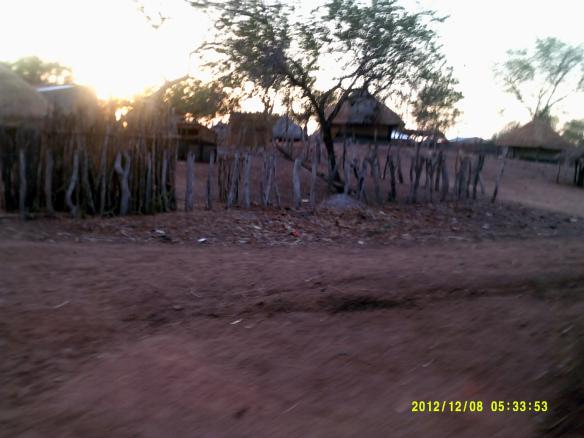
Then I climbed onto my bicycle and rode out of the village as the sun rose like a glowing ball on the horizon.

In the daylight I could finally see the village clearly — round mud houses with thatched roofs, dusty ground with chickens wandering everywhere, and the African savannah stretching beyond it.

And just like that, my Mozambique cycling adventure continued down the road toward Estima.

Sun rise village

Growing the LongDaySafaris Community on TikTok

Over the past few months I’ve been thinking about how to grow the longdaysafaris.com community and share more of the things I’m passionate about. So I’ve made a few changes that I’d like to share with you.

First, I’ve launched a TikTok account as well as a TikTok Seller account on TikTok. The goal is to create short videos related to the things many of us enjoy—travel, cycling, farming life, and the occasional story from the road.

Alongside the videos, I’ve also started putting items up for sale through the platform. At the moment, I’m beginning with print-on-demand T-shirts, some of which are inspired by farming life and cycling culture. These are two passions of mine, and it seemed like a natural place to start. Here are two links to my first print on demanad T-shirts. At this stage they are only available on tikTok in the USA:

Cycle tourist https://www.tiktok.com/t/ZP9Re7MN8rkpq-oMMyB/

Freedom cycling https://www.tiktok.com/t/ZP9Re7wUaXj4F-uzRFe/

Over time I plan to expand into other items and ideas related to:

  • Farming and livestock life
  • Bicycle touring and long-distance cycling
  • Travel and safari experiences
  • Practical gear and products connected to these lifestyles

Another interesting development has been the impact on this blog. Since setting up the TikTok accounts, the traffic to LongDaySafaris has more than doubled. That tells me there is real interest out there, and it has motivated me to begin posting more regularly again.

But I’d like this site to grow with the help of the people who read it.

I’d love your feedback

What topics would you like me to write about?

Some ideas might include:

  • Bicycle touring routes and tips
  • Stories and experiences from African travel
  • Farming life and livestock production
  • Preparing for international travel
  • Advice for first-time visitors to Africa

If there’s something you’d like to know more about, feel free to leave a comment or send me a message. Your feedback will help guide future posts.

A New Perspective

Another change in my life is that I now live in the United States. That has given me a different perspective on travel and logistics, especially for people planning trips abroad. Because of this, I hope I can be even more helpful to international travelers planning trips to Africa—whether it’s understanding the realities of travel, preparing properly, or simply knowing what to expect.

LongDaySafaris started as a place to share experiences from the road. Going forward, I hope it becomes even more of a community for people interested in adventure, cycling, farming life, and travel.

Thanks for reading and for being part of the journey. Here are a few photos to wet your thirst.